The Art of Indoor Cat Enrichment: Creative DIY Projects to Stimulate Your Feline’s Mind
Cats are natural explorers, hunters, and problem-solvers, but when confined indoors, their instincts can become stifled without the right stimulation. While store-bought toys and furniture are great, there’s something uniquely rewarding about crafting DIY enrichment projects tailored to your cat’s personality. Not only do these projects engage your feline’s mind and body, but they also strengthen the bond between you and your pet. Whether you’re a seasoned DIY enthusiast or a beginner looking for simple ideas, these creative projects will transform your home into a feline paradise.
The Importance of Indoor Enrichment
Indoor cats face a unique set of challenges compared to their outdoor counterparts. Without the stimulation of hunting, climbing, or exploring, they can become bored, lethargic, or even develop behavioral issues like excessive scratching, aggression, or overeating. Enrichment isn’t just about keeping your cat entertained—it’s about fulfilling their natural instincts in a safe, controlled environment. Studies show that cats with access to enrichment activities are less likely to develop stress-related conditions, such as feline separation anxiety or obesity. By providing a variety of sensory experiences, you’re not just improving their quality of life; you’re enhancing their overall well-being.
Sensory Stimulation: Engaging All Five Senses
Cats experience the world through their senses, and the best enrichment projects cater to all of them. Start by considering what your cat already loves. Does your feline go wild for catnip? Are they fascinated by crinkly sounds or the rustle of paper? Do they love to climb or hide? Tailoring projects to their preferences ensures they’ll stay engaged. For example, a simple cardboard box can become a multi-sensory playground with the addition of crinkly paper, hidden treats, and a sprinkle of catnip. The key is to rotate these projects regularly to prevent boredom—what’s exciting today might be old news tomorrow.
DIY Projects to Spark Your Cat’s Curiosity
1. The Ultimate Cardboard Maze
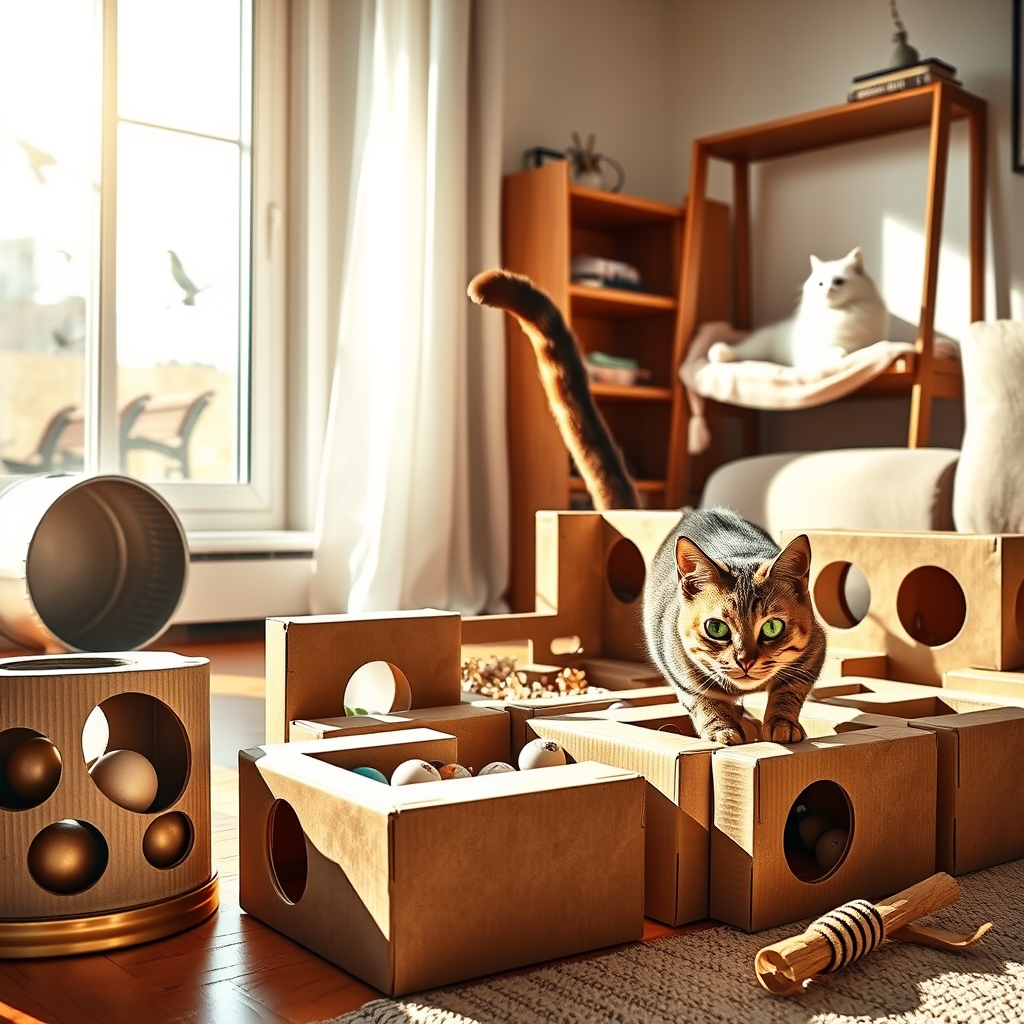
Cardboard is one of the most versatile and cost-effective materials for cat enrichment. To create a cardboard maze, gather several boxes of varying sizes and cut entry and exit holes in the sides. Arrange them in a labyrinth-like pattern, ensuring there are multiple pathways for your cat to explore. Add tunnels by cutting the tops and bottoms off smaller boxes and connecting them. For extra fun, hide treats or small toys inside the maze to encourage your cat to sniff them out. This project engages their hunting instincts and provides a safe space for them to hide, pounce, and play.
2. Homemade Puzzle Feeders
Puzzle feeders are a fantastic way to slow down fast eaters and stimulate your cat’s problem-solving skills. You can make a simple puzzle feeder using a muffin tin and some ping pong balls. Place treats or kibble in the muffin tin compartments and cover them with the balls. Your cat will need to bat the balls away to access the food, turning mealtime into a fun challenge. For a more advanced version, drill holes into a plastic container, fill it with treats, and let your cat figure out how to roll it around to release the goodies. These feeders mimic the natural foraging behavior of cats and keep them mentally sharp.
3. Window Perches and Bird Watching Stations
Cats love to observe the world outside, and a window perch provides the perfect vantage point. You can create a simple perch using a sturdy shelf or a repurposed wooden board attached to the windowsill with brackets. Add a soft cushion or blanket for comfort, and position it near a window with a view of birds, squirrels, or passing cars. For an extra touch, set up a bird feeder outside the window to attract wildlife. This project taps into your cat’s predatory instincts and provides hours of entertainment. If you’re feeling ambitious, you can even build a catio—a screened-in enclosure that allows your cat to experience the outdoors safely.
4. DIY Catnip Toys and Kick Sticks
Catnip is a powerful tool for enrichment, and making your own catnip toys is easier than you think. For a simple kick stick, take an old sock, fill it with catnip and stuffing, and sew or tie the end shut. Your cat will love bunny-kicking and wrestling with it. For a more interactive toy, create a catnip-filled fabric mouse by cutting two small mouse-shaped pieces of fabric, sewing them together (leaving a small opening), stuffing them with catnip and cotton, and then sewing the opening shut. These toys are perfect for solo play and can be refreshed with more catnip as needed.
5. The Great Indoor Obstacle Course
Turn your living room into an agility course using household items. Start with a tunnel made from a large cardboard box with both ends cut off. Add hurdles using broomsticks balanced on stacks of books, and create a balance beam with a narrow plank of wood. Scatter treats or toys along the course to encourage your cat to navigate it. You can even use a laser pointer to guide them through the obstacles. This project is great for physical exercise and mental stimulation, and it’s a fun way to interact with your cat. Plus, you can rearrange the course regularly to keep it fresh and exciting.
Tips for Maximizing Enrichment Success
While DIY projects are a fantastic way to enrich your cat’s life, there are a few tips to keep in mind to ensure they’re as effective as possible. First, always supervise your cat when introducing a new project, especially if it involves small parts or materials they could ingest. Second, rotate the projects regularly to maintain your cat’s interest—what’s novel today might be ignored tomorrow. Third, pay attention to your cat’s preferences. Some cats are climbers, while others prefer to hide or hunt. Tailoring projects to their personality will yield the best results. Finally, don’t forget to incorporate interactive playtime into your routine. While DIY projects are great for solo enrichment, nothing replaces the bond formed through play with their human.
Creating a stimulating environment for your indoor cat doesn’t have to be expensive or time-consuming. With a little creativity and some household items, you can transform your home into a feline wonderland that caters to their natural instincts. Whether it’s a cardboard maze, a puzzle feeder, or a window perch, these projects will keep your cat engaged, happy, and healthy. The joy of seeing your feline friend explore, pounce, and play is a reward in itself, and the benefits of a well-enriched life will last for years to come. Every cat deserves a home that challenges their mind and body, and with these DIY ideas, you’re well on your way to providing just that.